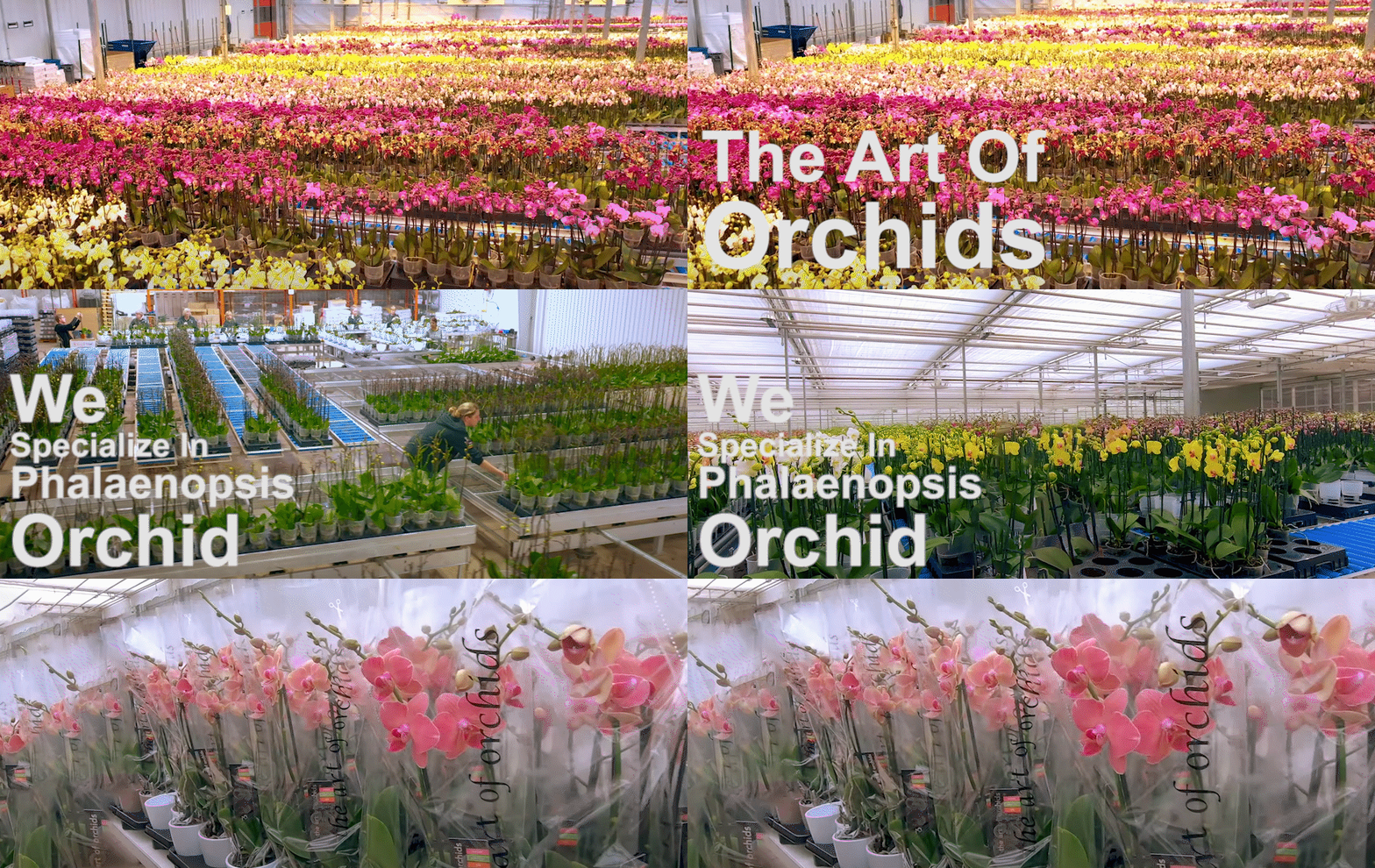
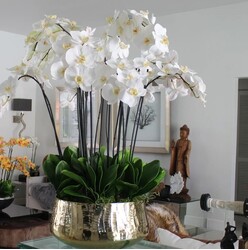
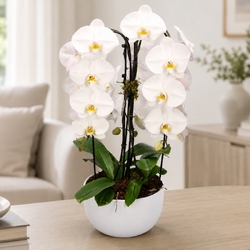
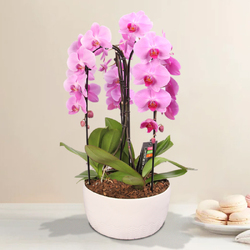
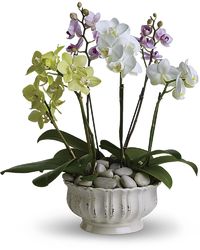
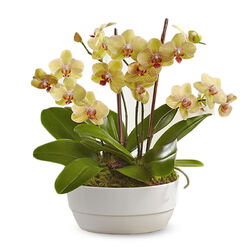
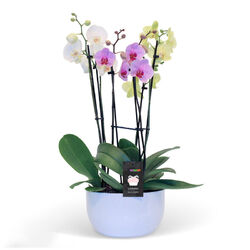
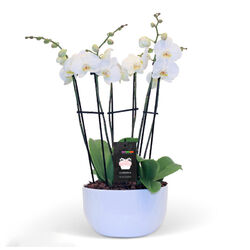
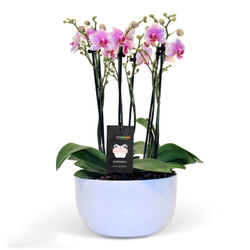
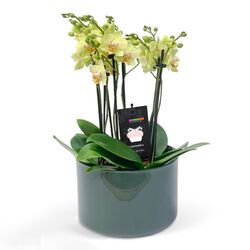
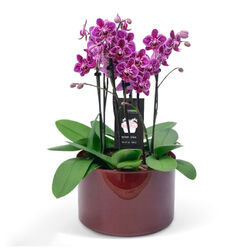
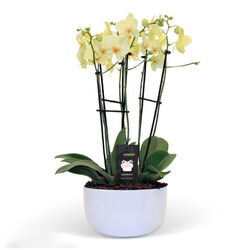
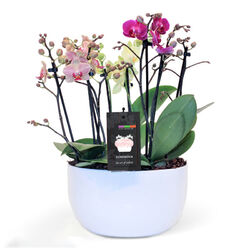
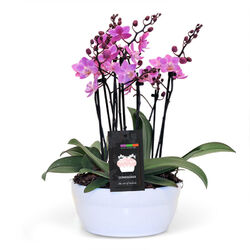
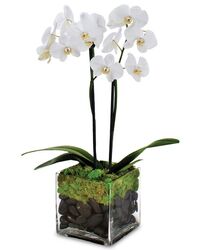
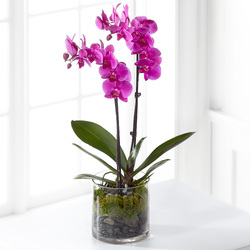
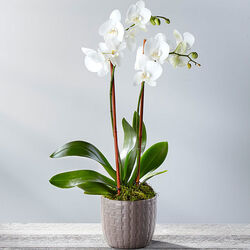
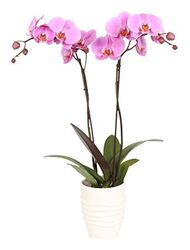
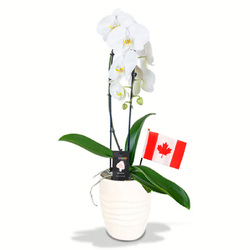
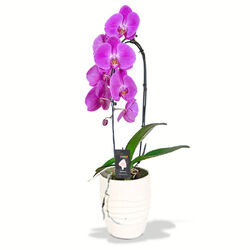
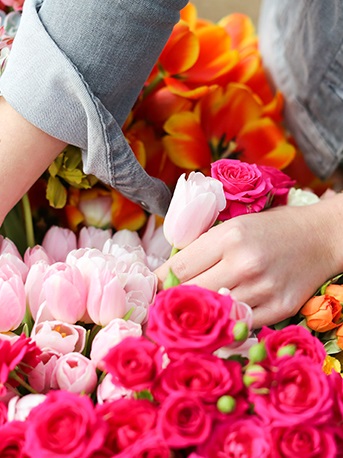
An orchid plant makes a memorable gift through its graceful stems, sculptural blooms, and polished presentation. It brings living colour into the recipient’s surroundings while feeling refined without being overly formal.
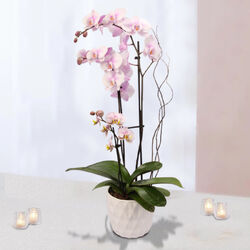
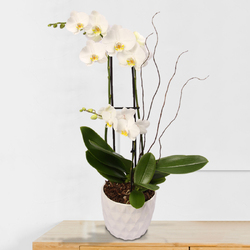
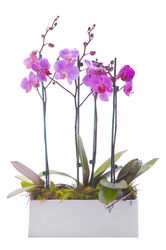
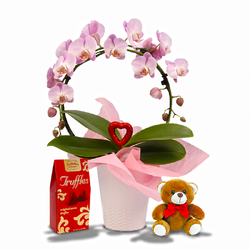
The collection features a wide variety of potted orchids, including white and pink Phalaenopsis plants, mini orchids, cascading designs, infinity-circle orchids, multi-plant arrangements, and statement planters. The live page currently includes 32 orchid gifts in different sizes and presentations.
Choose the colour according to the recipient’s personal style and surroundings. White orchids create a clean, understated appearance, while pink orchids add warmth and gentle colour. A planter combining several orchid shades offers more visual variety.
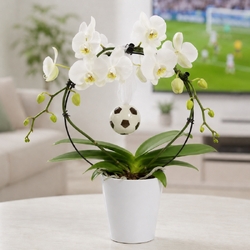
The shape of the plant can make the gift feel especially distinctive. Traditional upright stems have a timeless appearance, cascading orchids create graceful movement, and trained circle designs turn the stems into a more decorative focal point.
Consider the recipient’s available display space when selecting a size. A single orchid can fit comfortably on many household surfaces, while a fuller planter with several plants needs more room and creates a stronger visual presence.
The container completes the presentation. Neutral ceramic pots feel clean and versatile, while textured, colourful, or contemporary planters can give the orchid more personality. Choose a style that complements the recipient’s décor as well as the blooms.
Most products in this collection are living Phalaenopsis orchids rather than cut orchid arrangements. Phalaenopsis orchids can grow well near a bright window with little or no strong direct sunlight, although the recipient should follow the instructions included with the specific plant.
Orchid watering should be based on the growing medium and indoor conditions rather than a rigid calendar. The American Orchid Society recommends watering Phalaenopsis thoroughly and waiting until the medium is approaching dryness before watering again.
Complete the orchid with a personal card message that reflects the recipient. Mention their elegance, strength, creativity, or simply tell them that you wanted to send something beautiful for their space.
Frequently Asked Questions About Orchid Plants
What is the difference between an orchid plant and cut orchid flowers?
An orchid plant is a living, rooted plant presented in a pot or planter. Cut orchid flowers are individual stems used in bouquets and floral arrangements without the living plant attached.
What type of orchid is commonly given as a potted gift?
Phalaenopsis orchids, also known as moth orchids, are widely used as indoor plant gifts. They are recognized by their broad leaves, arching stems, and rounded blooms.
Should I choose a white or pink orchid plant?
Choose white for a clean, graceful, and versatile presentation. Pink adds warmth and colour. The best option is the one that most closely reflects the recipient’s taste and surroundings.
What is a cascading orchid plant?
A cascading orchid has flowering stems arranged to curve or flow downward rather than remaining entirely upright. This creates a graceful shape and allows the blooms to be viewed at several levels.
What is an infinity-circle orchid?
An infinity-circle orchid has flexible flower stems trained around a circular support. The shaped presentation creates a distinctive decorative form while keeping the orchid as a living potted plant.
How do I choose the right orchid plant size?
Consider the surface and room where it may be displayed. A single or mini orchid suits a smaller area, while multi-plant and cascading designs need more space and create a fuller statement.
Where should a Phalaenopsis orchid be displayed?
Place it near suitable indoor light, such as a bright window with little or no harsh direct sun. Avoid choosing a location based only on appearance; the plant’s light needs should guide its placement.
How often should a potted orchid be watered?
There is no universal weekly schedule. Watering depends on the potting medium, container, temperature, light, and season. Check the plant and follow its care instructions rather than watering automatically on the same day each week.