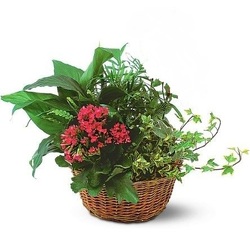
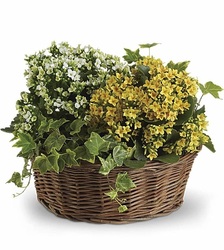
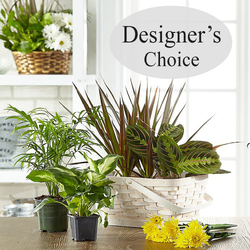
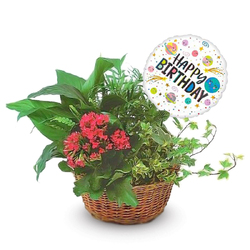
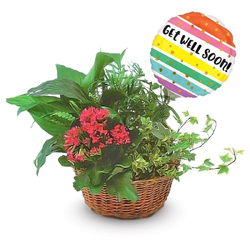
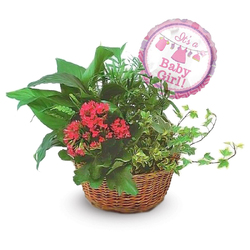
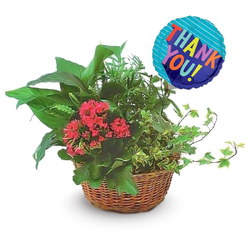
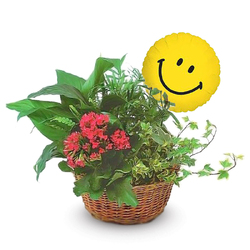
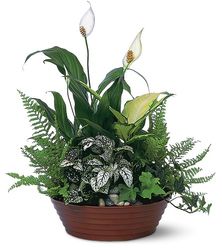
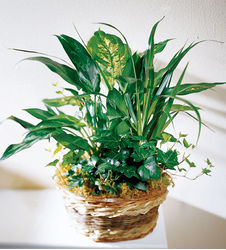
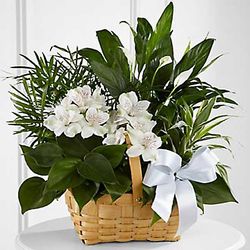
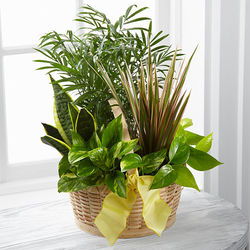
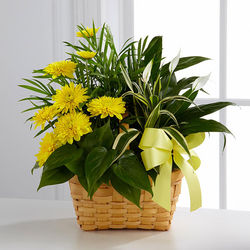
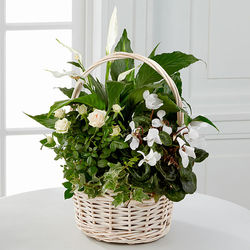
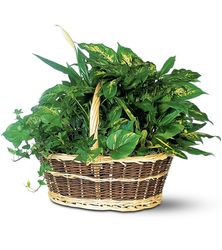
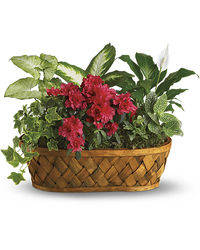
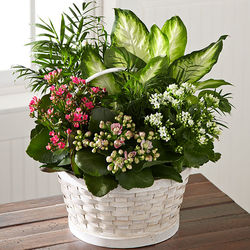
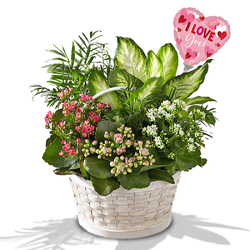
A dish garden is a coordinated arrangement of several living plants presented together in one decorative container. The combination creates the look of a miniature indoor garden, with more variety in foliage, colour, height, and texture than a single potted plant.
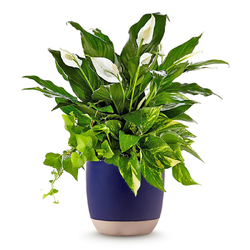
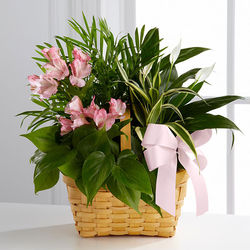
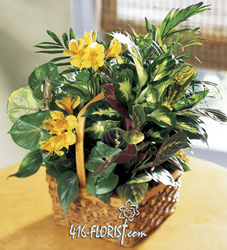
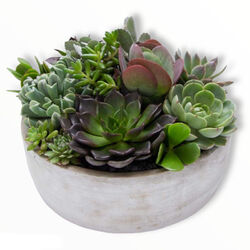
The collection includes mixed foliage gardens, blooming plant baskets, white and pink designs, blue-and-white arrangements, succulent combinations, and gardens featuring both tropical and flowering plants. Available presentations range from compact planted containers to fuller baskets with a more abundant display.
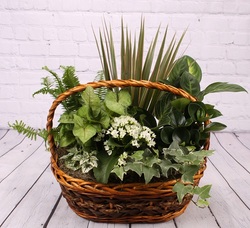
What makes a dish garden distinctive is the relationship between the plants. Different leaf shapes, shades of green, flowering accents, and varied heights are arranged to create one balanced composition rather than a group of unrelated pots.
Choose the size according to the recipient’s available space. A compact garden can fit comfortably on a smaller surface, while a larger basket or planter can become a stronger feature within a living area, entranceway, or other open space.
Colour can help guide the selection. White blooms and green foliage create a calm, coordinated appearance, while pink, yellow, or mixed flowering plants add a brighter and more expressive character.
The container also contributes to the overall style. A woven basket feels warm and natural, while a bowl or structured planter can create a cleaner, more contemporary presentation. Consider the recipient’s décor as well as the plants themselves.
Because a dish garden contains more than one plant, care should follow the instructions provided with the specific arrangement. Place it where the included plants receive suitable light and check the soil before adding water rather than relying on one fixed schedule.
Water gradually and observe how quickly the soil dries. The arrangement’s plant varieties, container, indoor temperature, and available light will all influence how often it needs attention.
As the plants grow, some dish gardens can continue as one arrangement, while others may eventually be separated into individual containers. This depends on the plant varieties, root growth, and how the original garden has been constructed.
Complete the gift with a personal card message. Tell the recipient you wanted to send them something living, beautiful, and filled with several little details to discover.
Frequently Asked Questions About Dish Gardens
What is a dish garden?
A dish garden is a group of living plants arranged together in one decorative bowl, basket, or planter. The plants are selected and positioned to create a coordinated miniature garden.
Are the plants in a dish garden real?
Yes. Dish gardens are made with living plants that require appropriate light, water, and general plant care. They are different from artificial plant displays.
How is a dish garden different from a single potted plant?
A single potted plant features one main variety, while a dish garden combines several plants in one coordinated presentation. This creates more variation in foliage, height, colour, and texture.
What size dish garden should I choose?
Choose a smaller design for a recipient with limited display space. A fuller basket or planter is better suited to a larger room or when you want the gift to make a stronger visual impression.
Where should a dish garden be displayed?
Place it in a comfortable indoor location with light suitable for the included plants. Keep the arrangement on a stable surface where its different colours, heights, and textures can be appreciated.
How do you water a dish garden?
Check the soil before watering and add water gradually. Follow the care instructions included with the arrangement, since the container and plant combination can affect how quickly moisture is used.
Do all dish gardens need the same amount of light?
No. Light requirements depend on the plant varieties included. Review the care information for the selected garden and choose a location that supports the entire arrangement.
Can the plants in a dish garden be separated later?
In many cases, individual plants may be moved into separate containers as they grow. Whether this is appropriate depends on the varieties, their roots, and how the garden was originally planted.