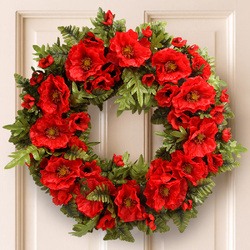
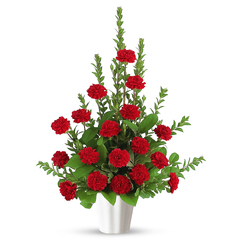
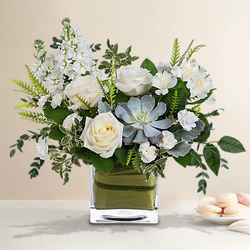
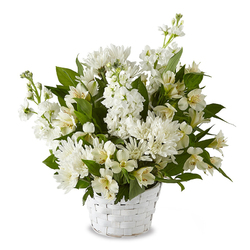
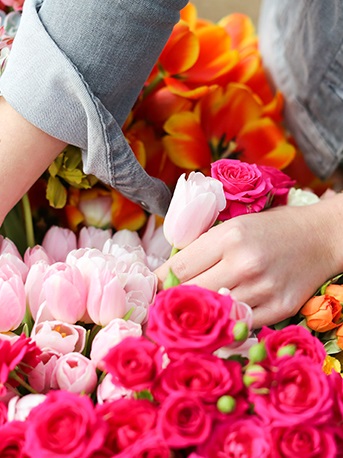
Colour can make a funeral tribute feel deeply personal. Rather than choosing flowers only because they are considered traditional, families may select a palette that reflects the person’s character, favourite colours, cultural background, or the atmosphere they want to create.
This collection brings together 31 funeral and sympathy arrangements across traditional, soft, rich, bright, and mixed colour palettes. It serves as a starting point for comparing different moods before continuing to the colour collection that feels most appropriate.
Begin with the person being remembered. A quiet, understated palette may suit someone known for their calm and gentle nature, while stronger or more colourful flowers may better represent a vibrant personality and a life filled with energy.
The style of the gathering can also guide the choice. Traditional services often use restrained and peaceful colours, while celebrations of life may include warmer, brighter, or more varied palettes that reflect happy memories and personal interests. Colourful flowers can be entirely appropriate when they suit the person or the family’s wishes.
Favourite colours can provide meaningful inspiration. Choosing a shade connected to the person’s clothing, garden, home, hobbies, heritage, or an important memory can make the tribute feel more personal than following a general rule.
Mixed-colour flowers are helpful when one shade cannot express everything you want the tribute to convey. A balanced combination can feel warm, uplifting, peaceful, or expressive while representing several parts of the person’s life and personality.
Cultural and religious traditions should always be considered before selecting a palette. Colours associated with mourning, celebration, or respect can differ between communities, and some traditions may prefer or avoid particular colours. When uncertain, review the funeral notice or ask the family or funeral home for guidance.
Flowers throughout the service do not need to match perfectly. Repeating a general palette or one visual detail can help the memorial feel connected while allowing each floral tribute to maintain its own meaning and purpose.
Free delivery to funeral homes is available on qualifying orders over $69. Provide the name of the person being remembered, the service location, and the visitation or ceremony time when ordering.
Frequently Asked Questions About Funeral Flower Colours
What colour flowers are appropriate for a funeral?
There is no single required colour. Traditional, pastel, rich, bright, and mixed palettes can all be appropriate when they reflect the person being remembered, the family’s wishes, and the tone of the service.
Do funeral flowers have to be white?
No. White is a traditional and widely used choice, but funeral flowers do not have to follow one colour convention. Personal meaning and family preferences can guide the selection.
Are bright-coloured flowers appropriate for a funeral?
Yes. Bright flowers may be especially suitable for a celebration of life or when they reflect the person’s favourite colours and personality. The arrangement should still feel respectful within the setting.
Can funeral flowers be chosen in the person’s favourite colour?
Yes. Using a favourite colour can make the tribute feel personal and connected to the person’s life, style, interests, or memories shared with family and friends.
Do different funeral flower colours have different meanings?
Colours are often associated with different emotions, but their meanings are not universal. Personal memories, cultural traditions, and the flowers used can all influence what the arrangement communicates.
Can you mix different colours in a funeral arrangement?
Yes. Mixed palettes can reflect several emotions or parts of the person’s personality. The colours may be softly blended for a gentle appearance or combined with greater contrast for a more expressive tribute.
Do funeral flower colours vary between cultures and religions?
Yes. Colours can carry very different meanings across cultural and religious traditions. A colour associated with mourning in one community may represent celebration in another, so family preferences should come first.